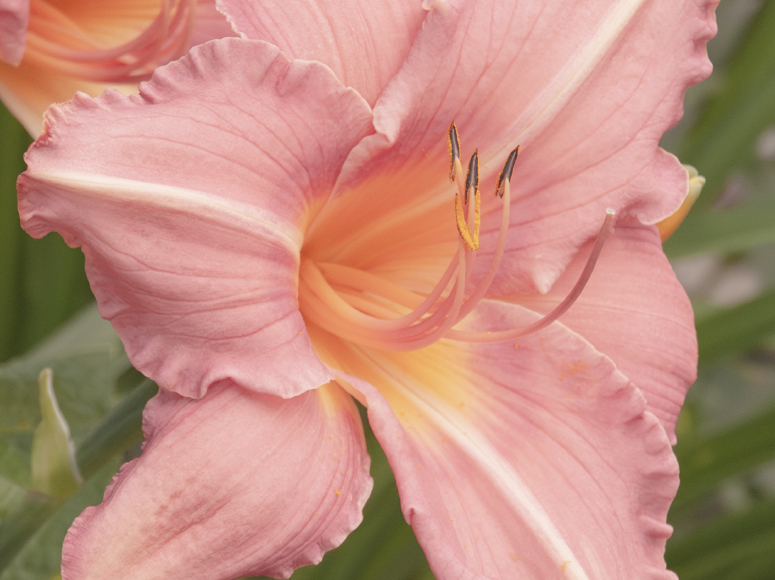

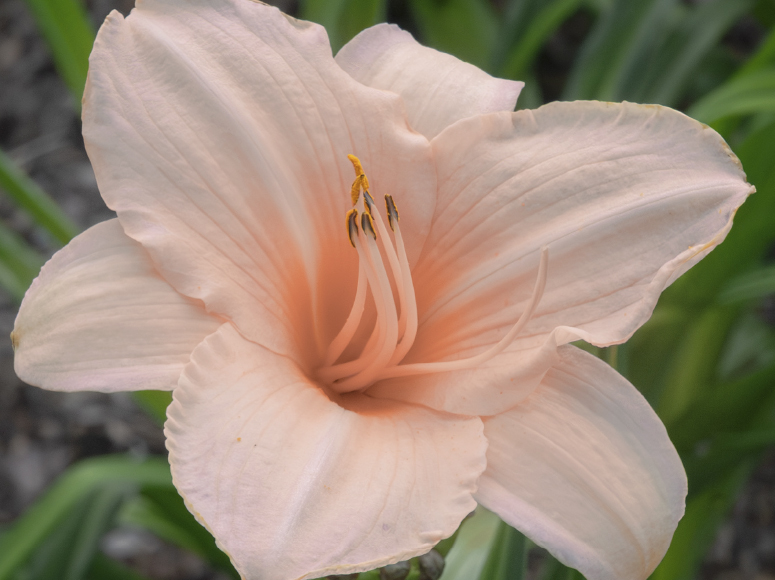
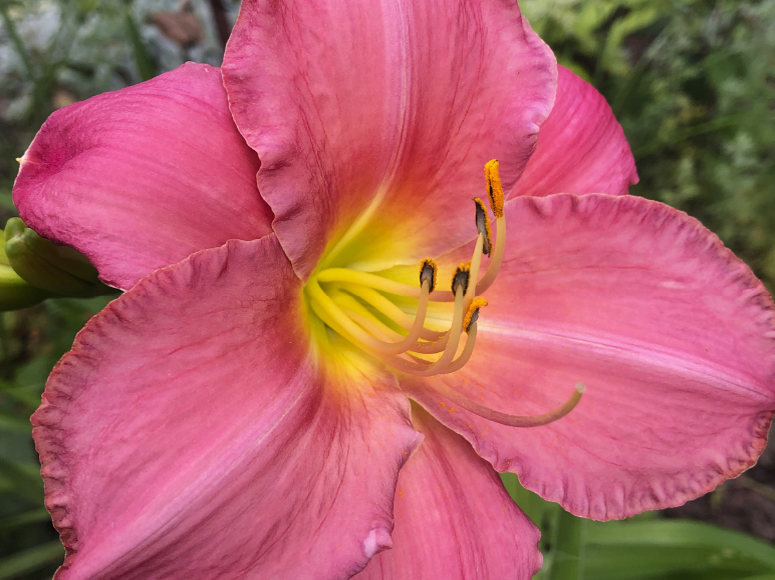
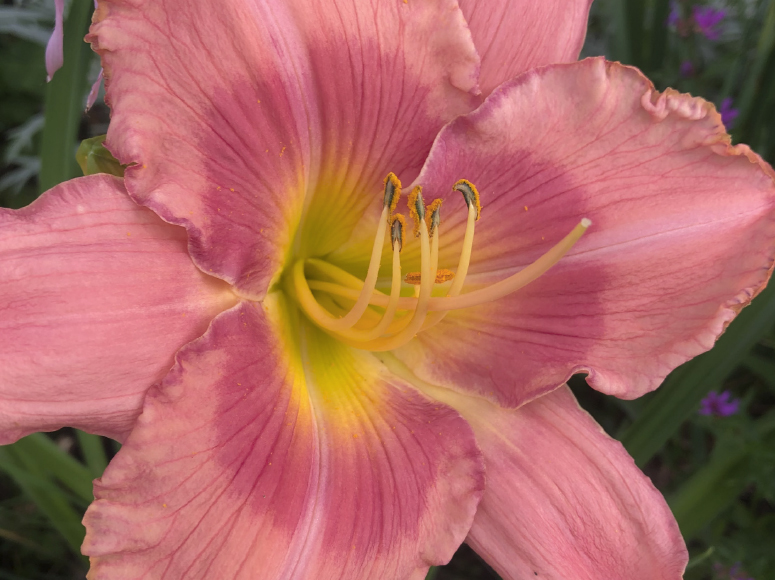
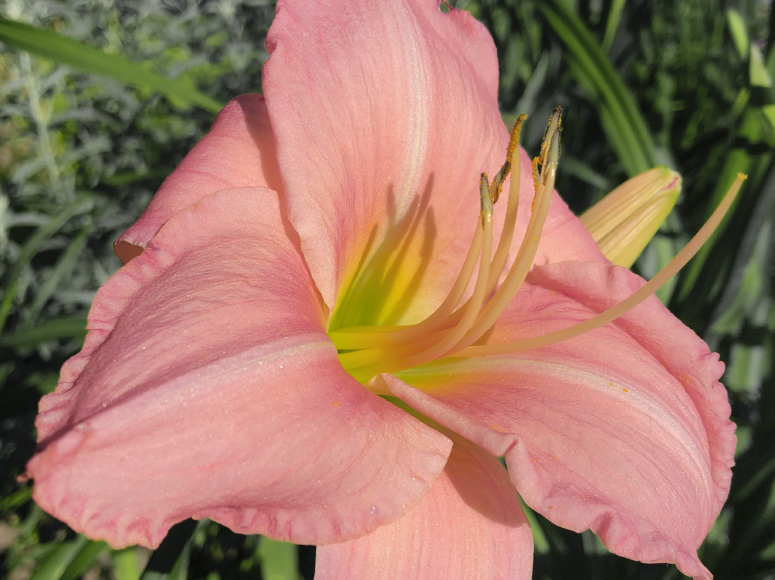
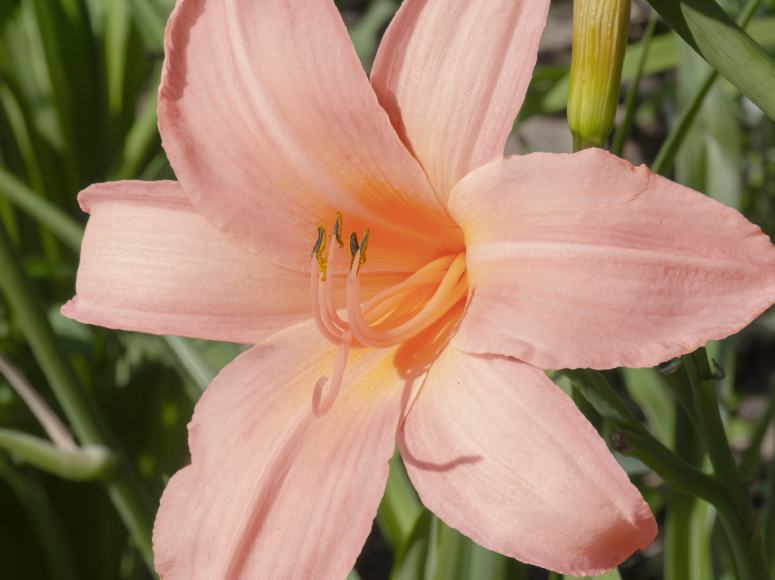
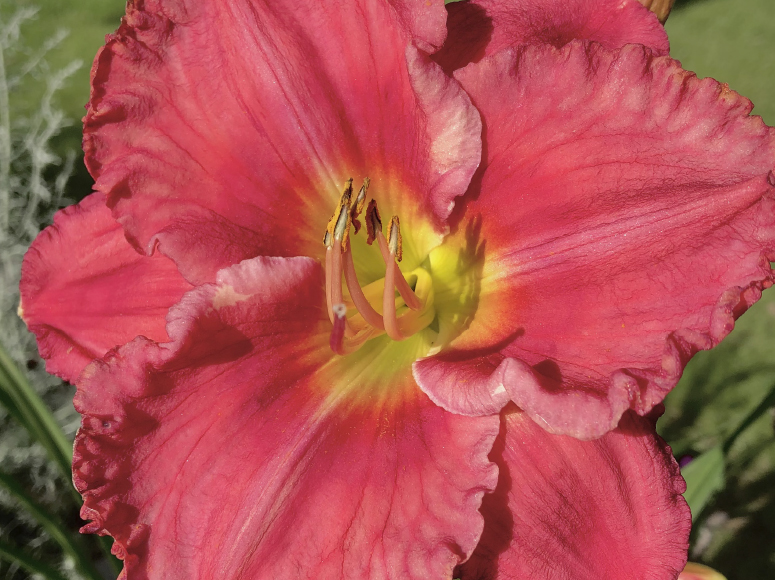
Pink
The term “pink” covers a wide range of shades in daylilies (Hemerocallis), from soft pastel pinks to more intense rose or salmon tones. These can include salmon pink (with a noticeable yellow component), lilac pink, or cooler bluish pinks, varying in saturation and intensity.
Pink tones derive primarily from anthocyanin pigments—especially cyanidin (a magenta/reddish-purple base)—at moderate to low levels, sometimes layered over subtle carotenoid backgrounds for added warmth or clarity. Almost all pink daylily blossoms look particularly appealing when green is visible in the throat, as this contrast enhances the color’s freshness and depth. Often, the petals show a slight deepening toward the throat without forming a distinct ring or eye zone, creating a smooth, natural gradient. Breeding clear, non-muddy pinks has been a key focus, as it balances pigment dilution to avoid shifts toward lavender or rose-red.
More details on featured cultivars
Individual pages for all featured cultivars will be added in the future. For complete registration info, parentage, hybridizer details, and more on any daylily, visit the official American Hemerocallis Society Daylily Database: search by cultivar name or hybridizer here.