



Orange
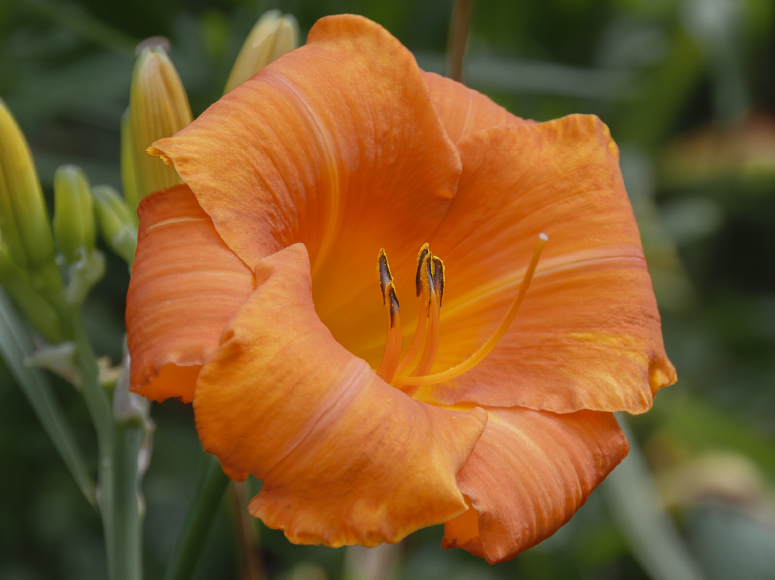
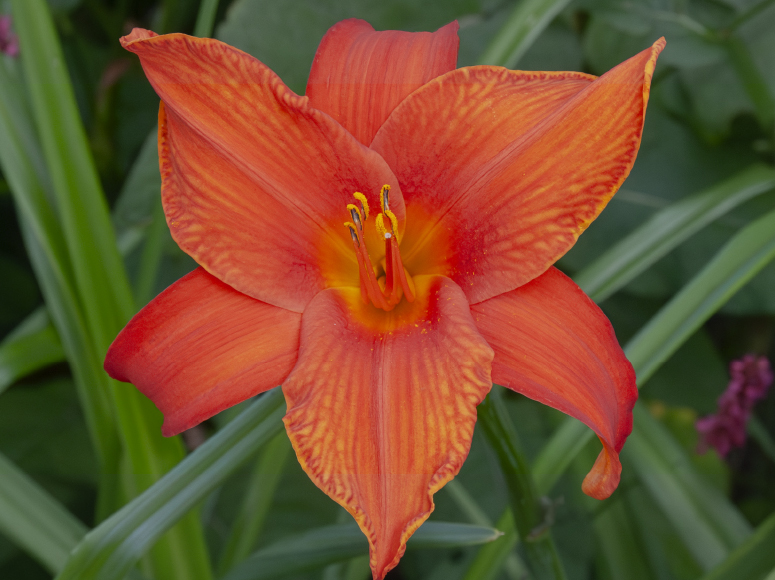
Orange flowers occur naturally in some wild Hemerocallis species, such as the familiar tawny or fulvous types. However, as a deliberate breeding goal in modern cultivated varieties, true orange has so far played only a minor role compared to more dominant colors like yellow, red, pink, or pastel blends.
True orange should not be confused with orange-yellow shades (which lean toward bright gold, lemon, or pure yellow) nor with melon-colored flowers (which tend toward softer pinkish or creamy tones due to a different pigment pathway). In daylilies, vivid orange hues often arise from the interaction or superimposition of red pigments (anthocyanins) with yellow or melon pigments (carotenoids), creating that warm, intense glow. High concentrations of certain carotenoids alone can also produce orange tones, while mixtures with anthocyanins add depth and complexity. This makes orange a challenging but rewarding color to achieve in breeding, as it requires precise balance of multiple pigment layers.
More details on featured cultivars
Individual pages for all featured cultivars will be added in the future. For complete registration info, parentage, hybridizer details, and more on any daylily, visit the official American Hemerocallis Society Daylily Database: search by cultivar name or hybridizer here.