

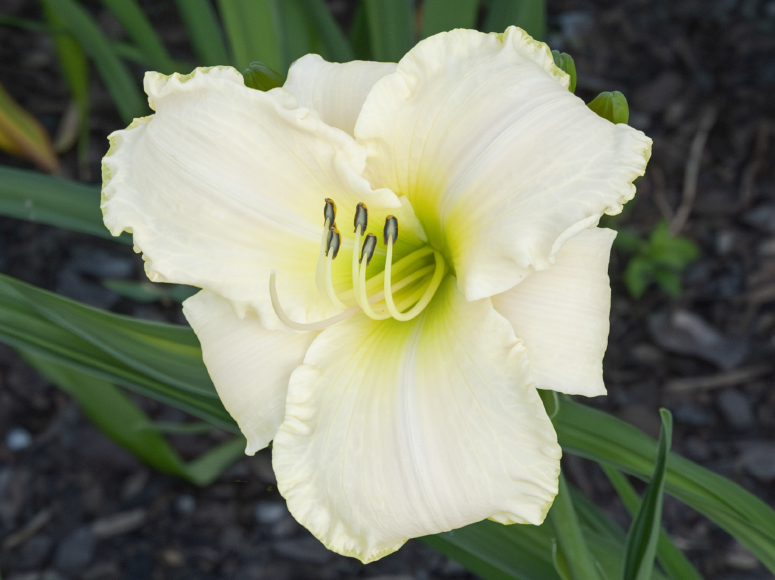
Near White
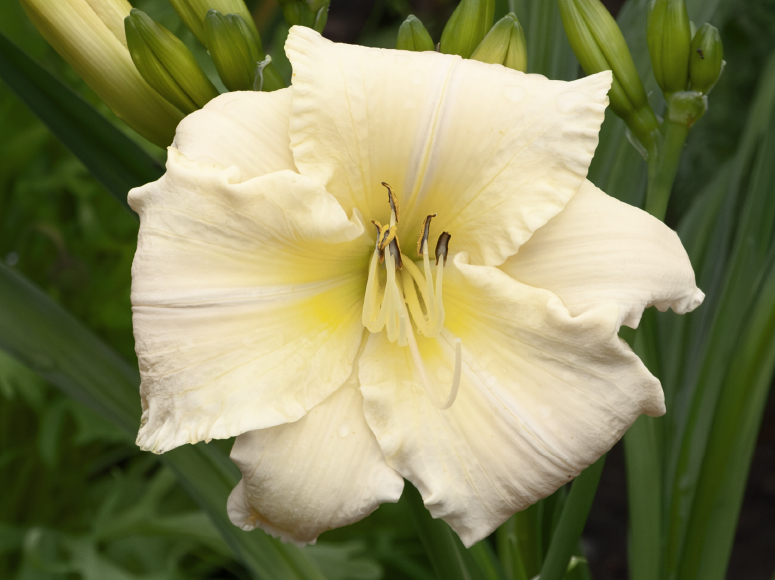
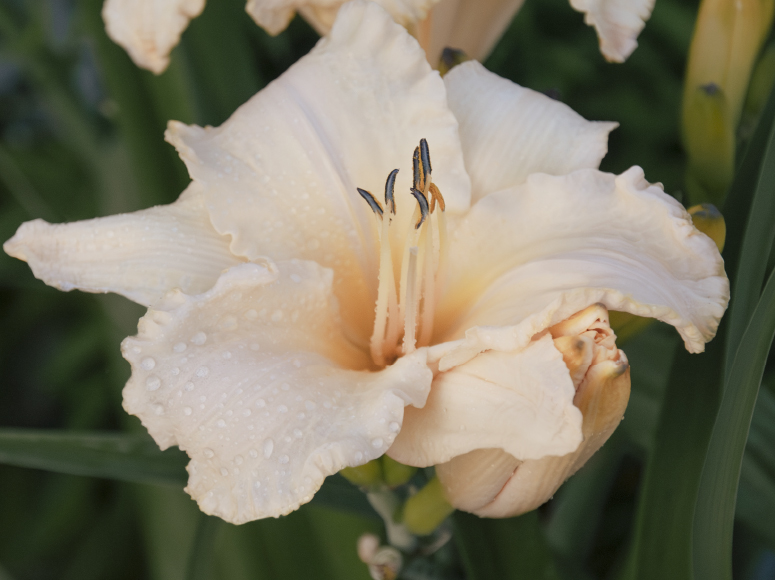
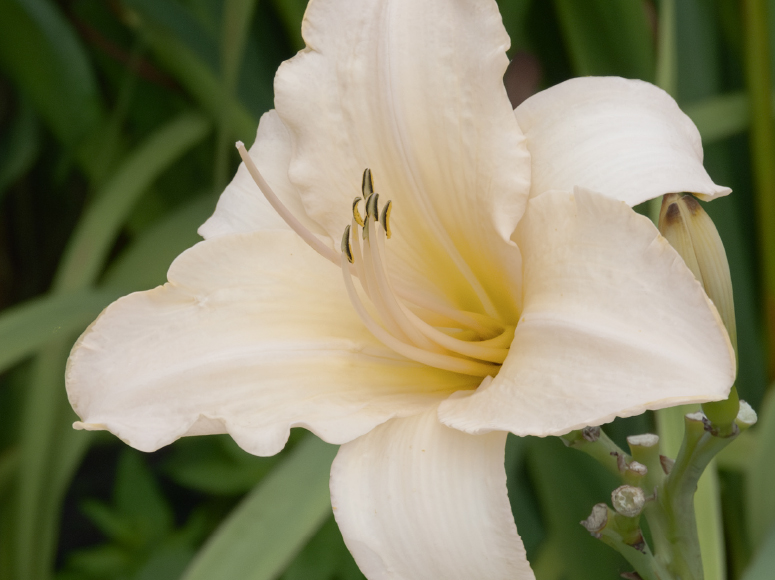
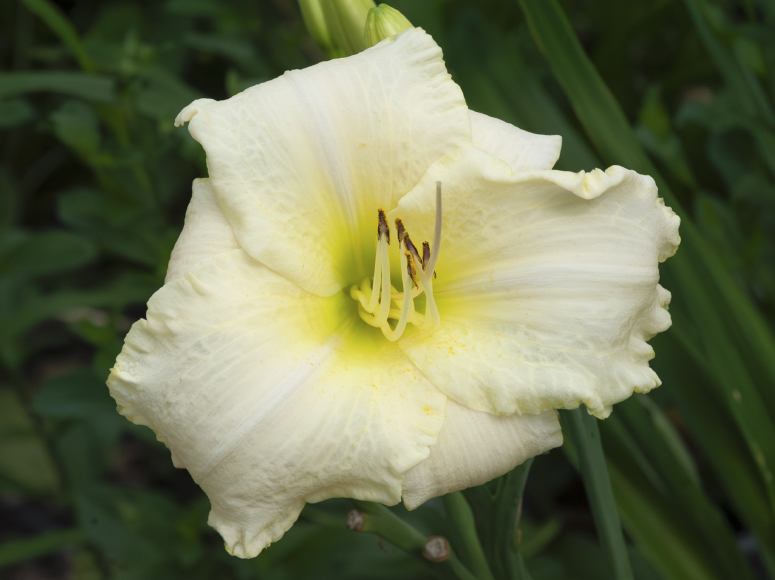
The color white in daylilies remains an approximation rather than a true achievement. Unlike many flowering plants where albino forms can produce pure white from blue or red bases, daylilies primarily synthesize yellow pigments (carotenoids such as violaxanthin or zeaxanthin). This biochemical foundation precludes true albino expression, so breeders pursue near-white through gradual selection of color-diluted seedlings—often starting from pale yellow, pink, or melon tones, with repeated backcrossing to lighten intensity while preserving clarity.
In optimal warm conditions, when pigment development is at its fullest, even cultivars selected for near-whiteness may display a subtle pale yellow overlay. Progress relies on patient, incremental steps in breeding, often involving modifiers that reduce carotenoid production without compromising flower form, substance, or garden performance. Near-white tones frequently appear among the palest tints of yellow or pink bases, and modern selections emphasize clean, sunfast results with minimal muddiness.
More details on featured cultivars
Individual pages for all featured cultivars will be added in the future. For complete registration info, parentage, hybridizer details, and more on any daylily, visit the official American Hemerocallis Society Daylily Database: search by cultivar name or hybridizer here.