

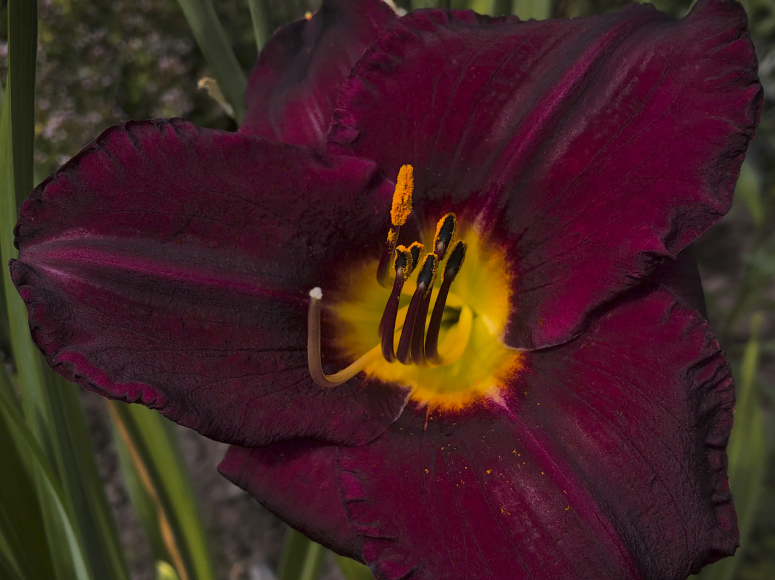

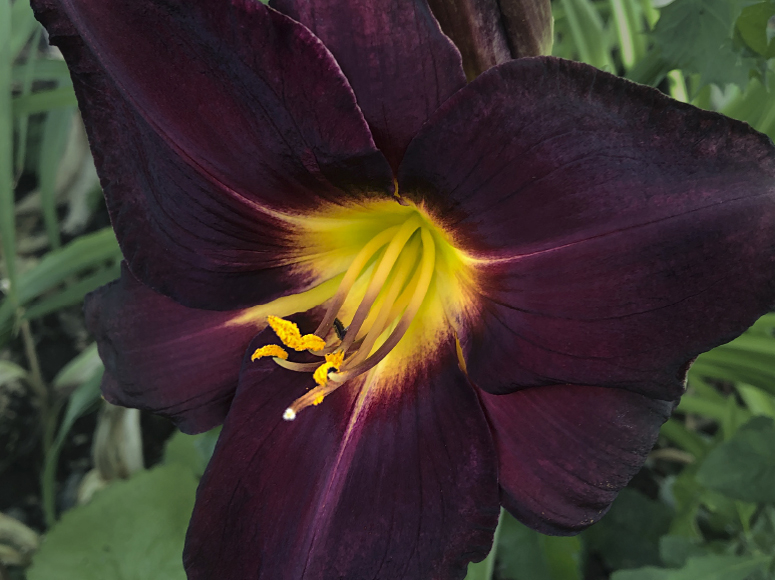

Near Black
”Near black” daylilies create a striking, velvety illusion of deep blackness—though true black pigment does not exist in Hemerocallis. These dramatic shades developed particularly after the introduction of tetraploid cultivars, as the increased cell size in tetraploids allows for much higher anthocyanin concentrations (primarily delphinidin and cyanidin layered densely), resulting in near-total light absorption and subtle purple, maroon, or brownish undertones.
Very dark daylilies, if planted in full sun, may overheat in intense heat and shift toward browner tones. Conversely, many varieties only develop their full, deepest color in warm weather; in cooler conditions, even inherently dark blooms can appear significantly lighter.
More details on featured cultivars
Individual pages for all featured cultivars will be added in the future. For complete registration info, parentage, hybridizer details, and more on any daylily, visit the official American Hemerocallis Society Daylily Database: search by cultivar name or hybridizer here.