

Hybridizing Hemerocallis altissima
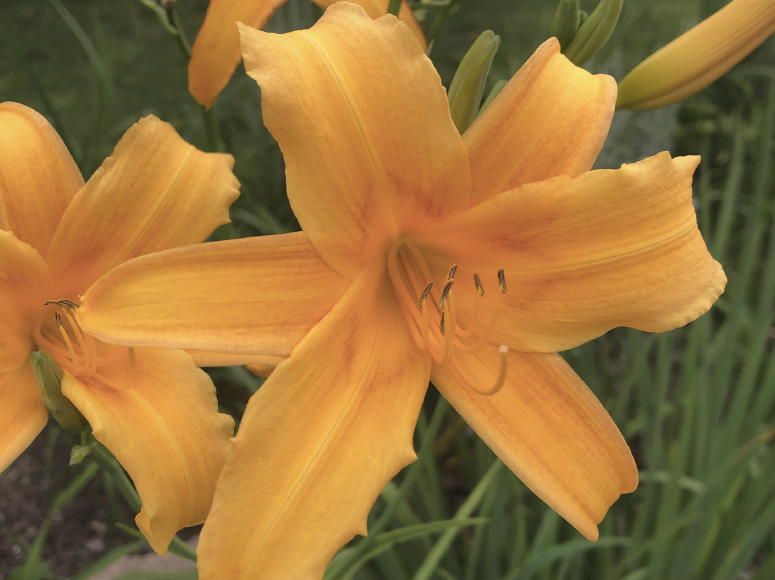
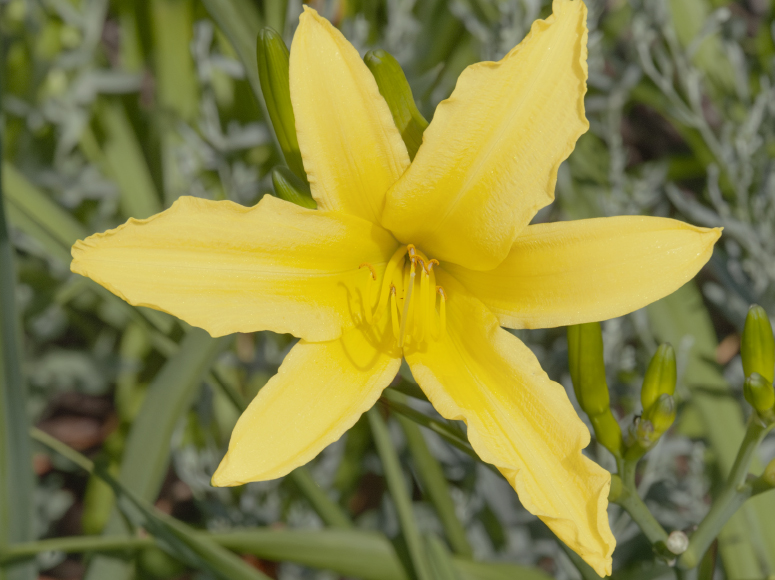
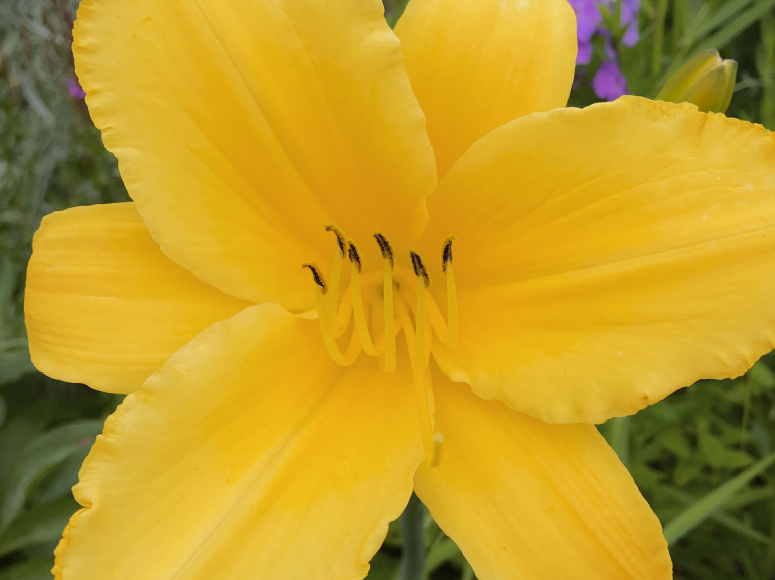
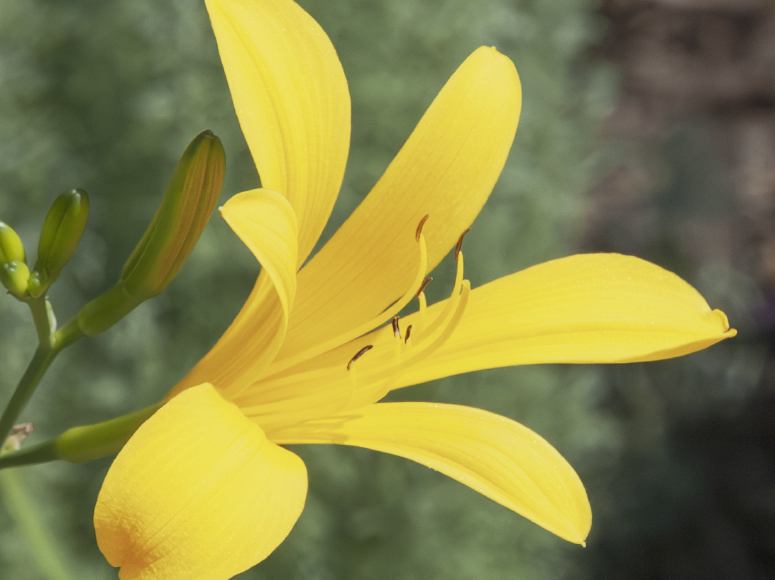
Tomas Tamberg, working in his Berlin garden, pursued very tall daylilies by incorporating the wild species Hemerocallis altissima. In cultivation there, this species reaches impressive heights of about 160 cm, with its characteristic tall, late-blooming habit and trumpet-shaped yellow flowers—qualities he sought to combine with improved garden traits like wider flower opening, better branching, and higher bud counts.
His foundational cross was Hemerocallis altissima × ’Cartwheels’ (selected for its wide-open flowers). Some seedlings were treated with colchicine to double the chromosome set and produce tetraploids, while the untreated (diploid) group yielded his first named cultivar: ’Rundblick’ (diploid, registered 1979). Although its flowers were not as wide as hoped upon first bloom, ’Rundblick’ proved valuable for its excellent branching and bud production. It served as a key parent in subsequent breeding but is no longer cultivated by Tamberg today, and is therefore not on display in Stockholm.
Crossing ’Rundblick’ with ’Werner Kerbs’ produced ’Berlin Multi’ (diploid, registered 1986). In Berlin, it reaches about 135–140 cm on vigorous, highly fertile plants, developing up to 92 buds per scape (often cited around 70+). It flowers in the late main season and has been used in creating tall, multi-budded, later-blooming cultivars.
Further generations built on this line:
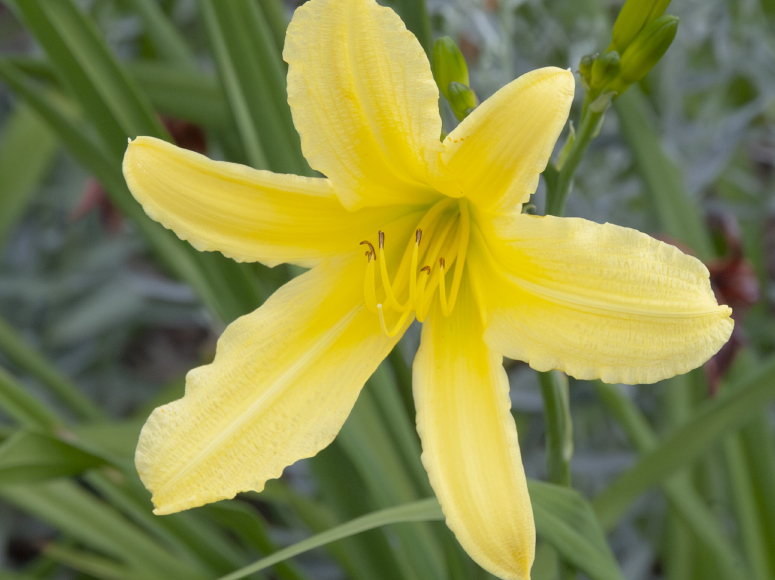
Crossing ’Berlin Multi’ with a late-flowering yellow variety gave ’Augustfreude’ (diploid, registered 1994), extending bloom well into August on excellently branched 140 cm scapes with pale yellow flowers.
From the colchicine-treated tetraploid seedlings (which had narrower opening than ’Rundblick’), Tamberg developed several lines: crosses with ’Lucretius’ yielded SHTT238; with ’Tetrina’s Daughter’ produced the highly floriferous ’Citralt’ (tetraploid, registered 2001, ~100 cm, vigorous and seed-fertile with pale yellow trumpet-shaped flowers incorporating H. citrina genetics); and with a red tetraploid gave ’Red Tallboy’ (tetraploid, registered 1998, large star-shaped red flowers on well-branched 150 cm scapes—vigorous and fertile, though tall varieties recover height slowly after transplanting).
Intercrossing F1 seedlings resulted in ’Berlin Maize’ and the broad-flowered ’Bralts’ (tetraploid, registered 2001, ~100 cm)—a breakthrough in overcoming the narrow trumpet shape of H. altissima, with flat, horizontally facing corn-yellow flowers for better garden visibility.
Later hybrids continued emphasizing height, late bloom, bud count, and landscape value:
’Keulenfalter’ (diploid, registered 2012): From Hemerocallis altissima × MiniSpeciesChina (a delicate Chinese wild species), featuring unusual spathulate (UFO-shaped) deep yellow flowers on wiry-branched scapes nearing shoulder height, blooming at peak season.
’Septembergruß’ (diploid, registered 2014): ’Augustfreude’ × H. littorea (an autumn-flowering species), reliably extending bloom into early September on 150 cm scapes with up to 35 sideways-facing golden-yellow flowers.
’Strahlemann’ (diploid, registered 2017): ’Berlin Multi’ × ’Gladys’, with sturdy 150 cm scapes, good branching, up to 28 buds, and medium-sized sideways-facing flowers in the late main season.
’Ashika’ (diploid, registered 2022): A late-blooming (into early September) tribute to a garden helper, reaching 140 cm with up to 35 buds per scape—highlighted as a top landscape variety, with H. littorea and ’Berlin Multi’ among its key ancestors.
The most recent addition to the Altissima lineage is ’Goldmark’ (tetraploid, registered 2026), the offspring from crossing a tetraploidized version of ’Berlin Multi’ with ’Milanese Mango’. Tamberg describes it as their best landscape variety to date: it consistently produces upright, well-branched stems reaching 125 cm in height with up to 25 buds per scape. The golden-yellow flowers are well-opened and relatively large, and the plant is fertile in both directions. At the 2025 European Daylily Evaluation, ’Goldmark’ received the designation ‘Recommended Landscape Variety’. In Stockholm we hope to welcome ’Goldmark’ to our collection in the coming years.